

Marjorie Moore Presents: The Show Must Go On!
June 25 - August 8, 2026
Sidle House Gallery, Freeport, Maine
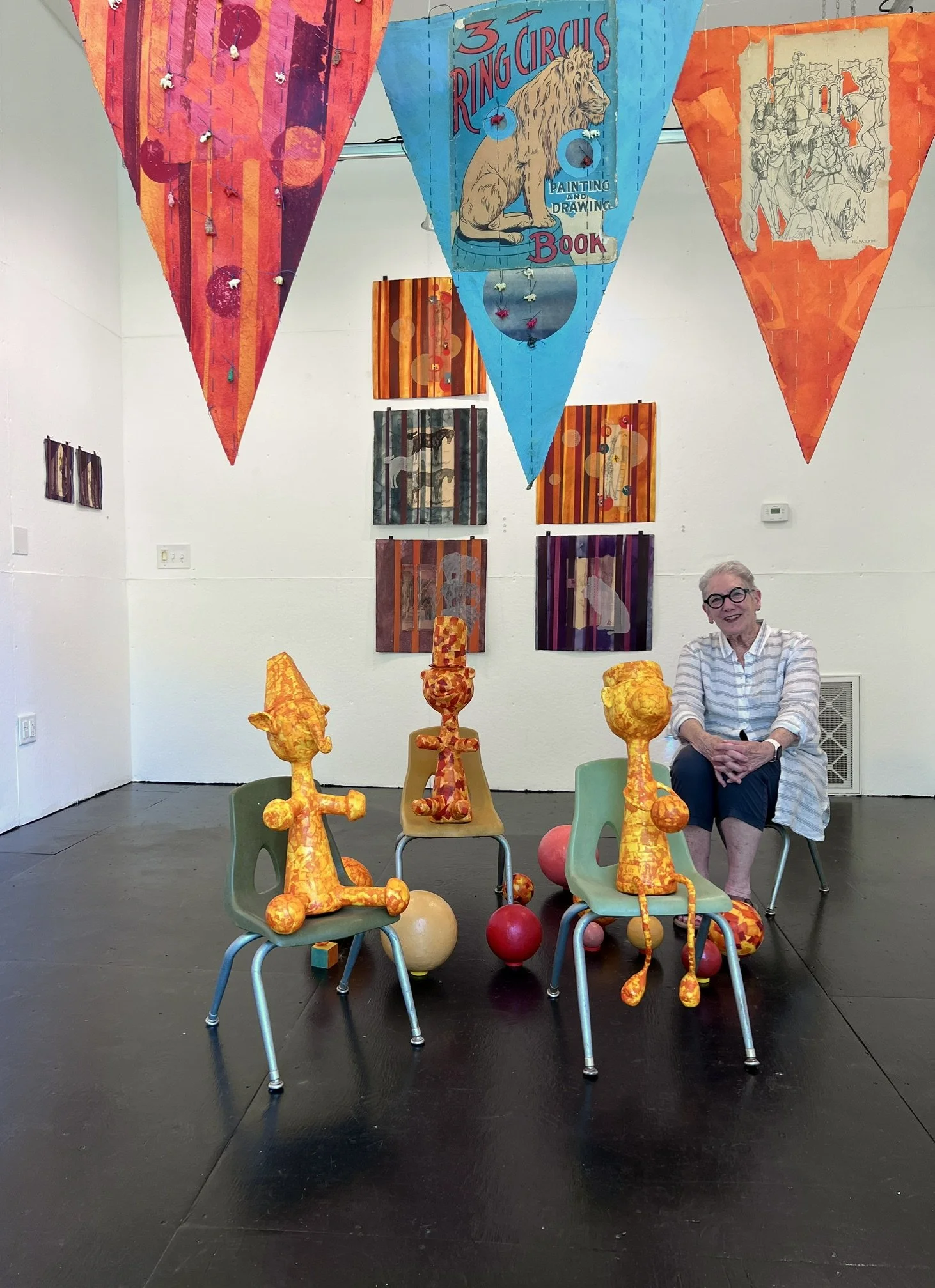
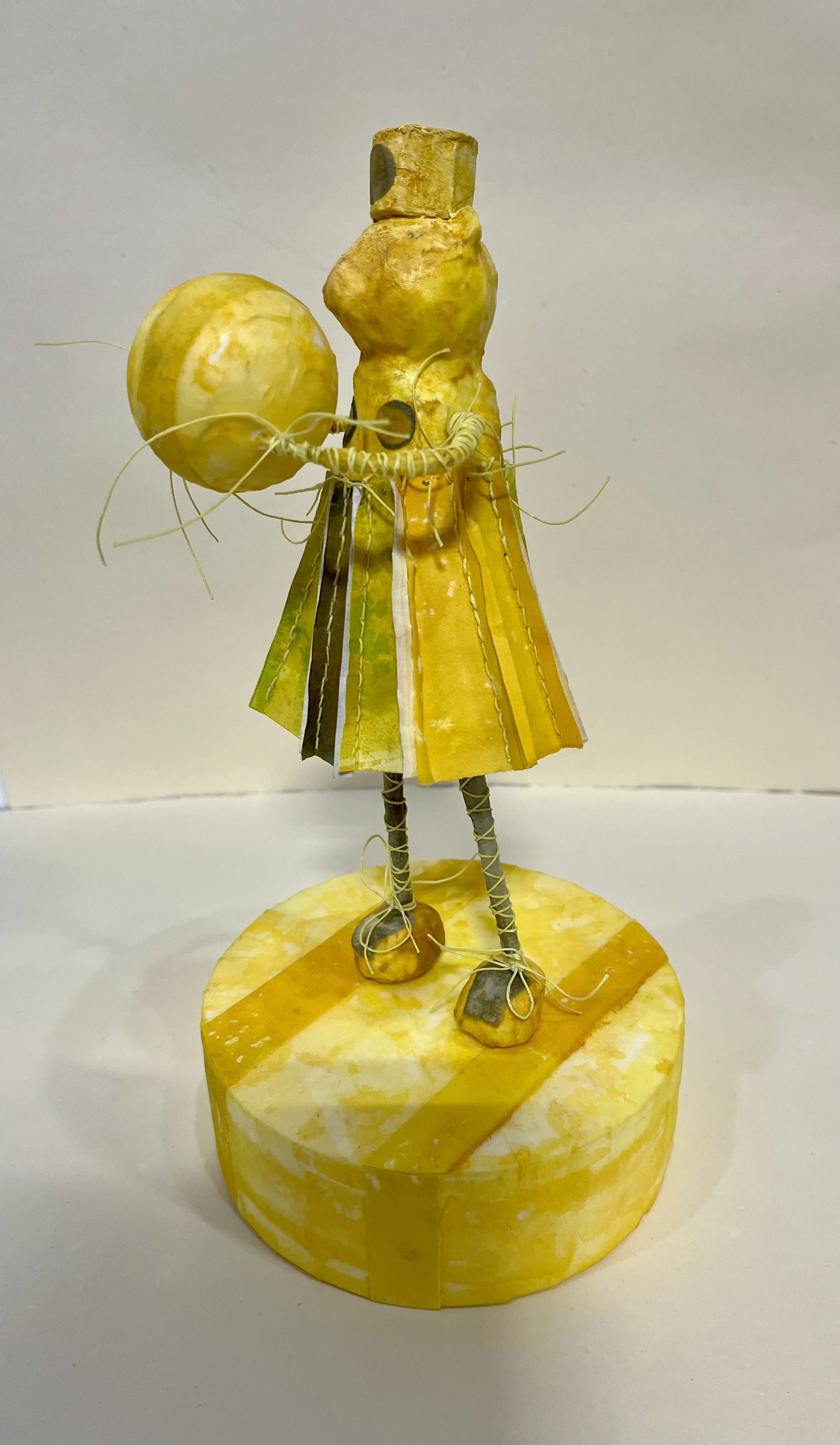
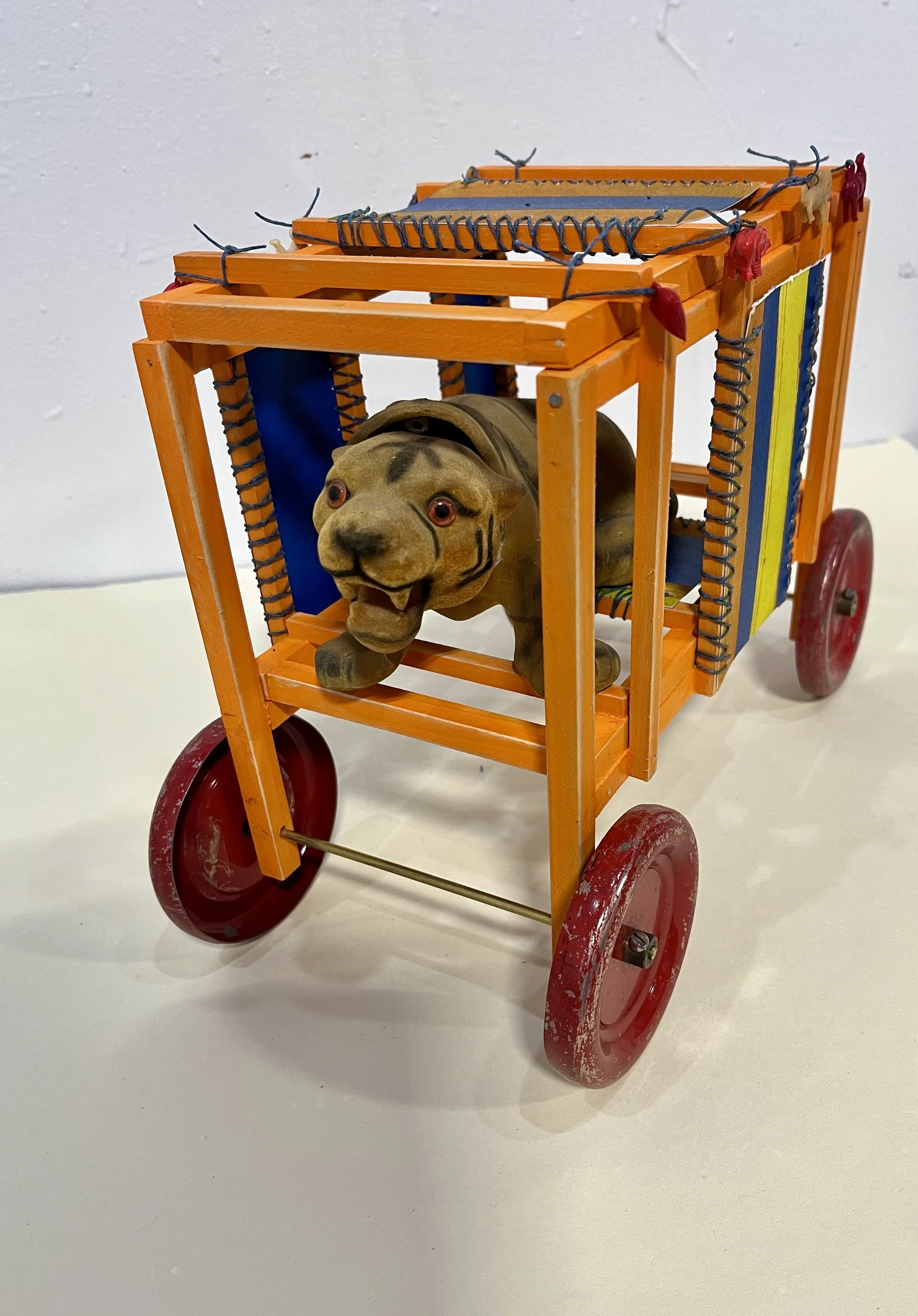
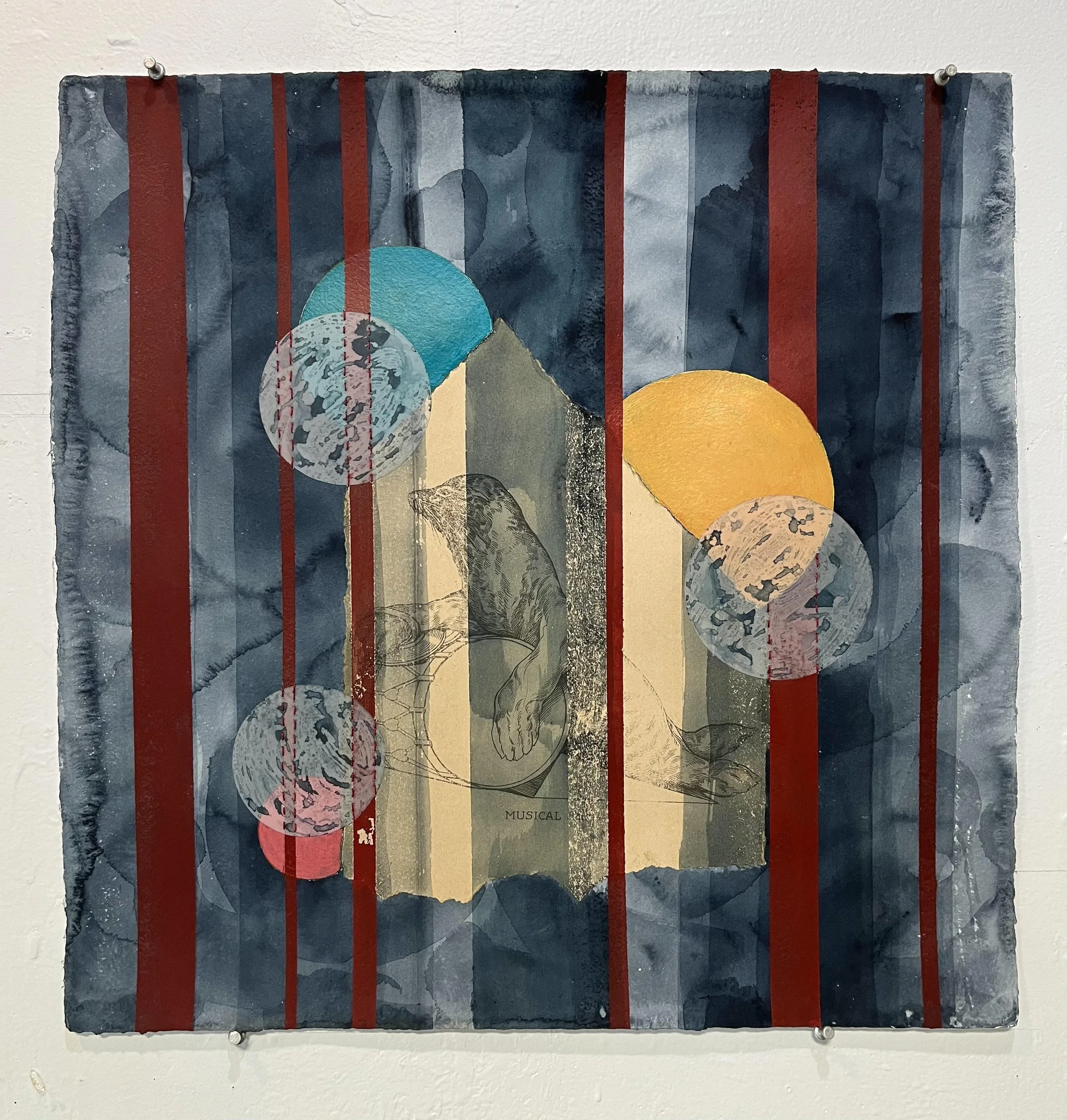
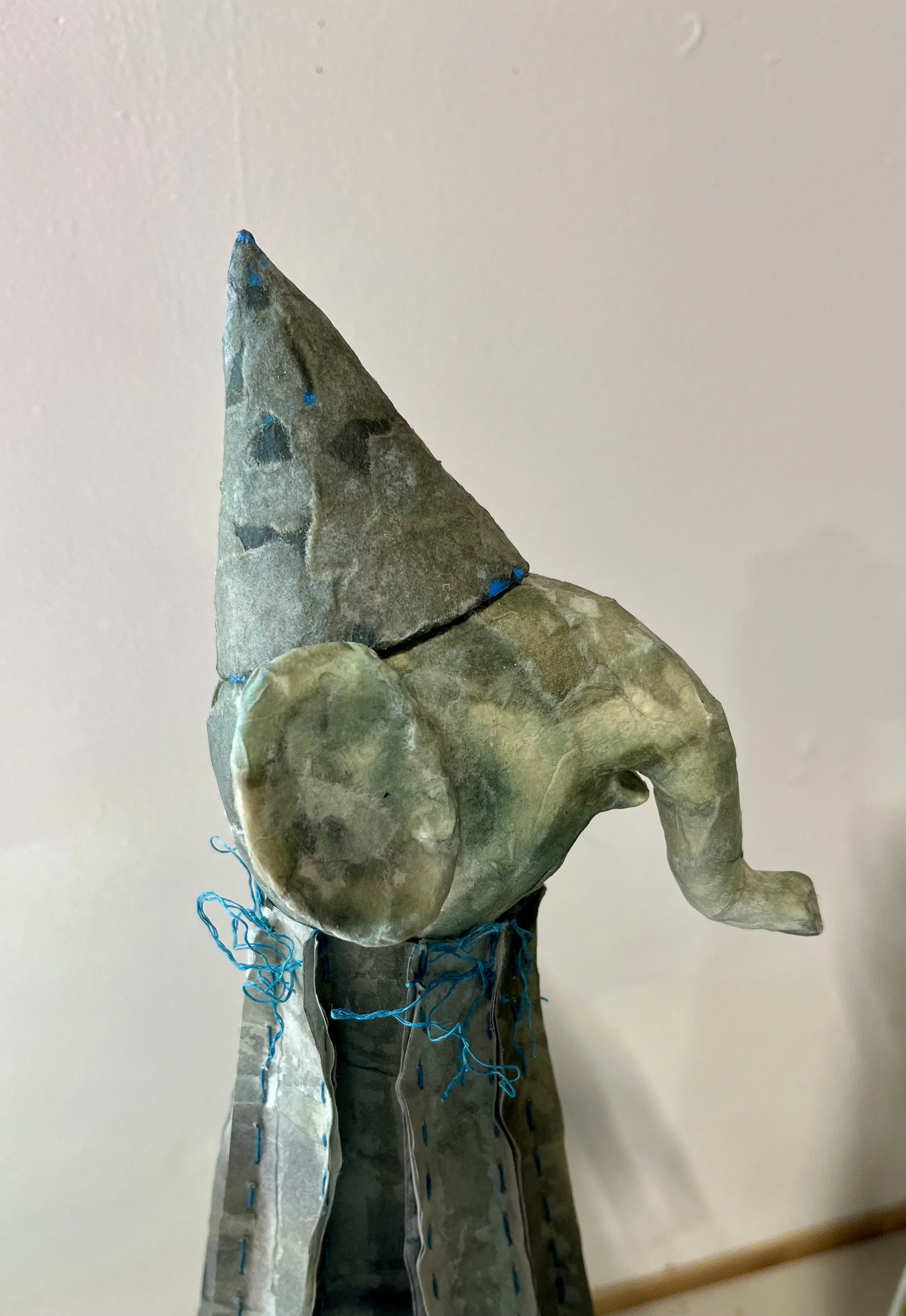
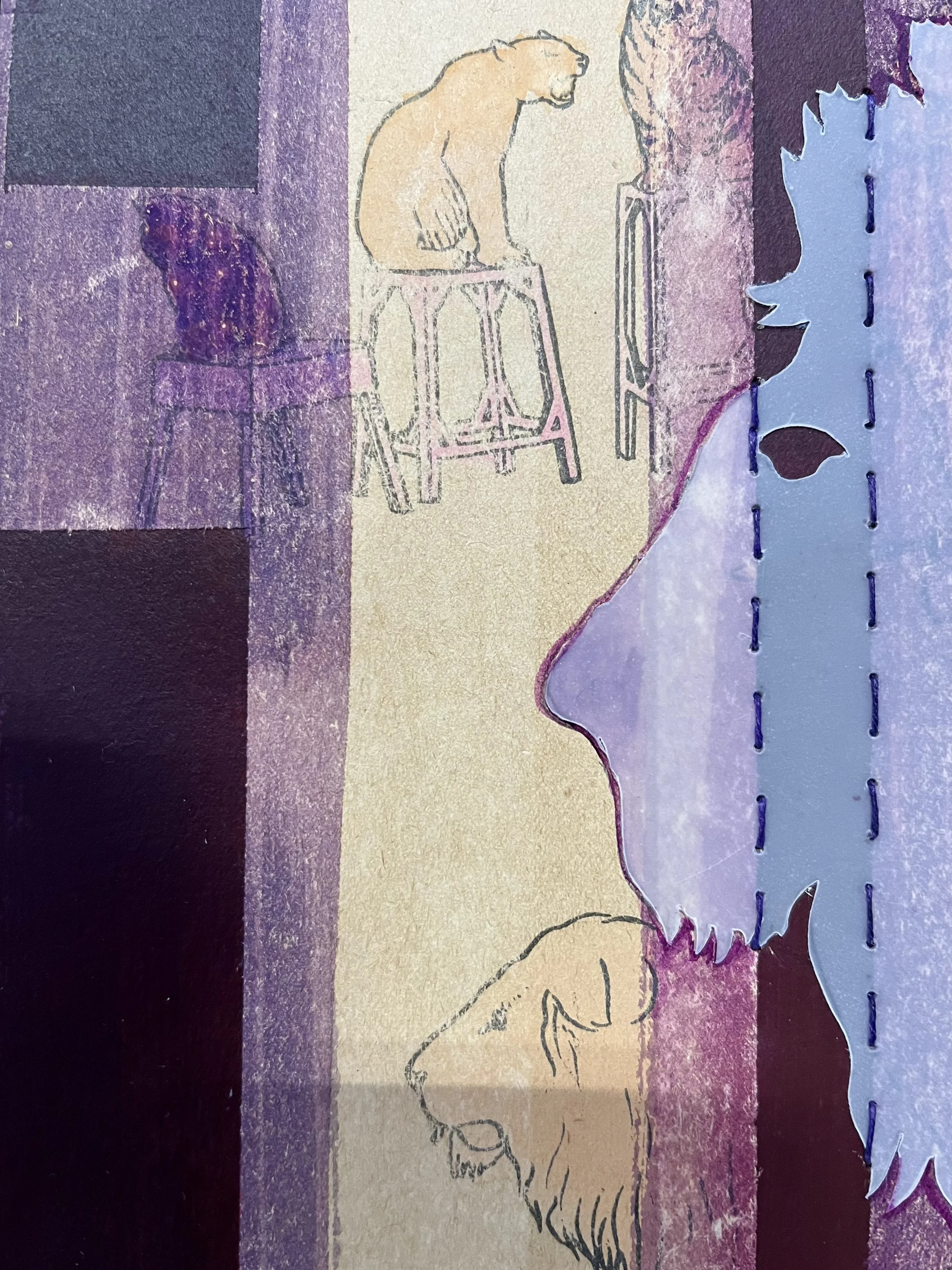
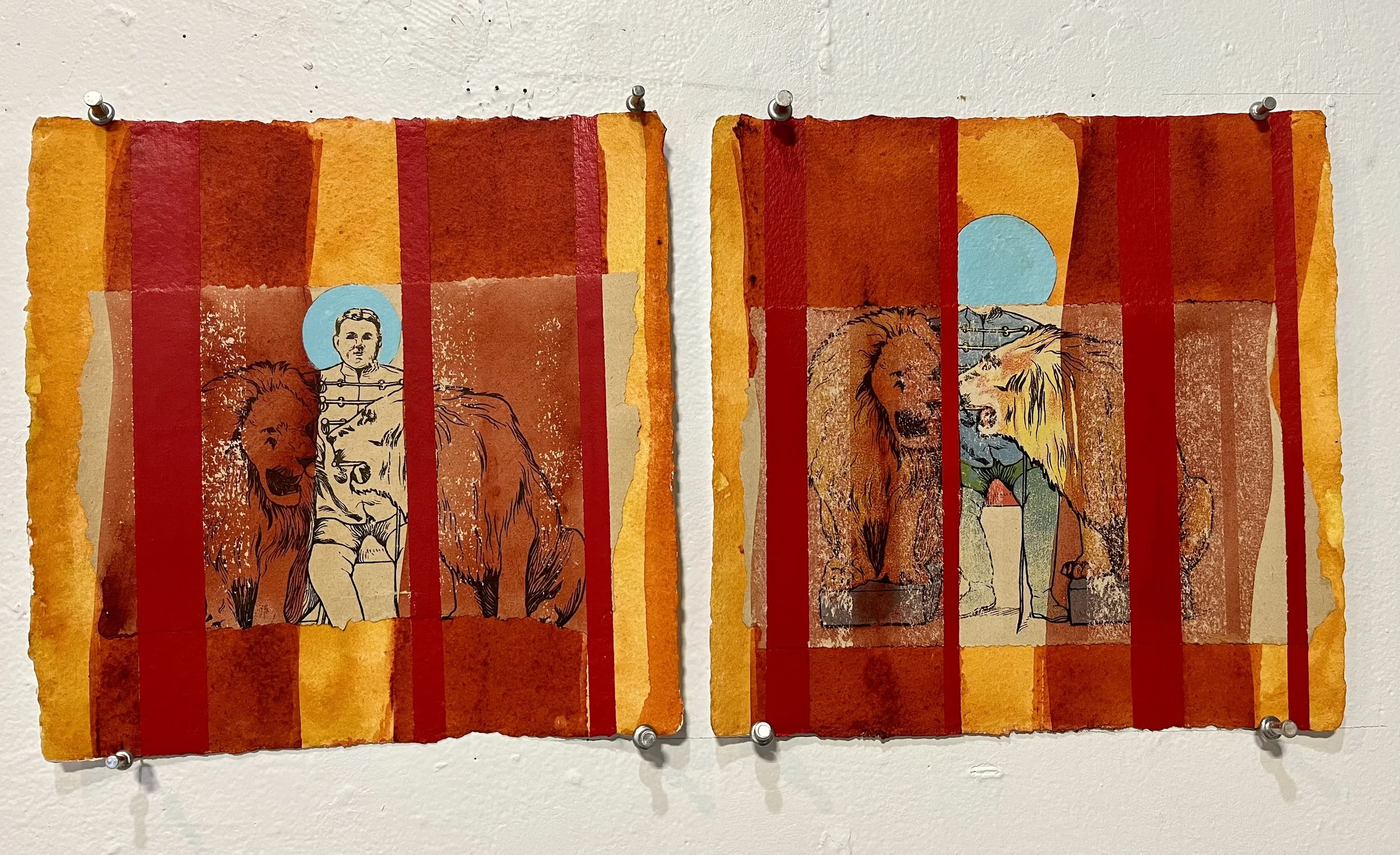
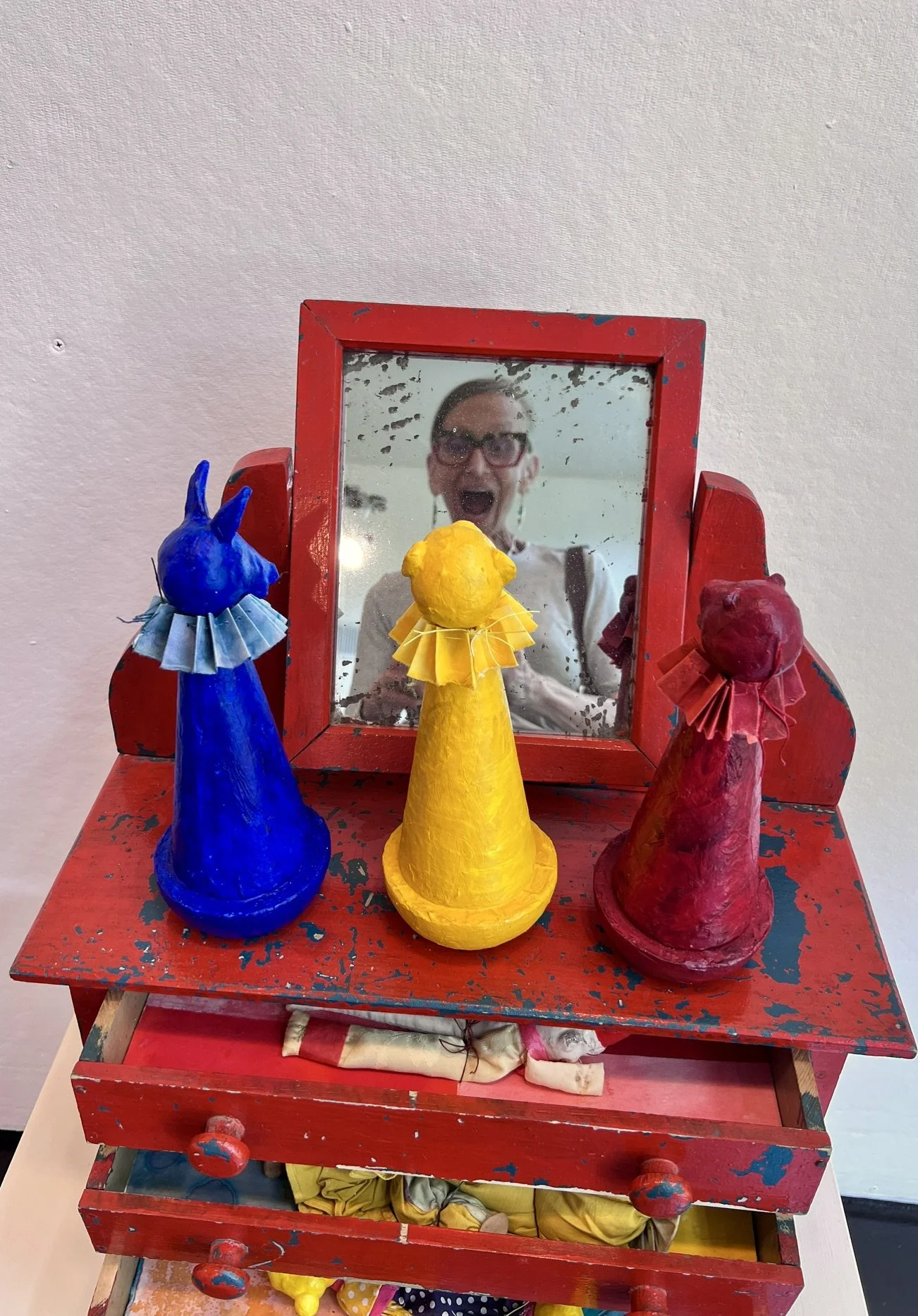
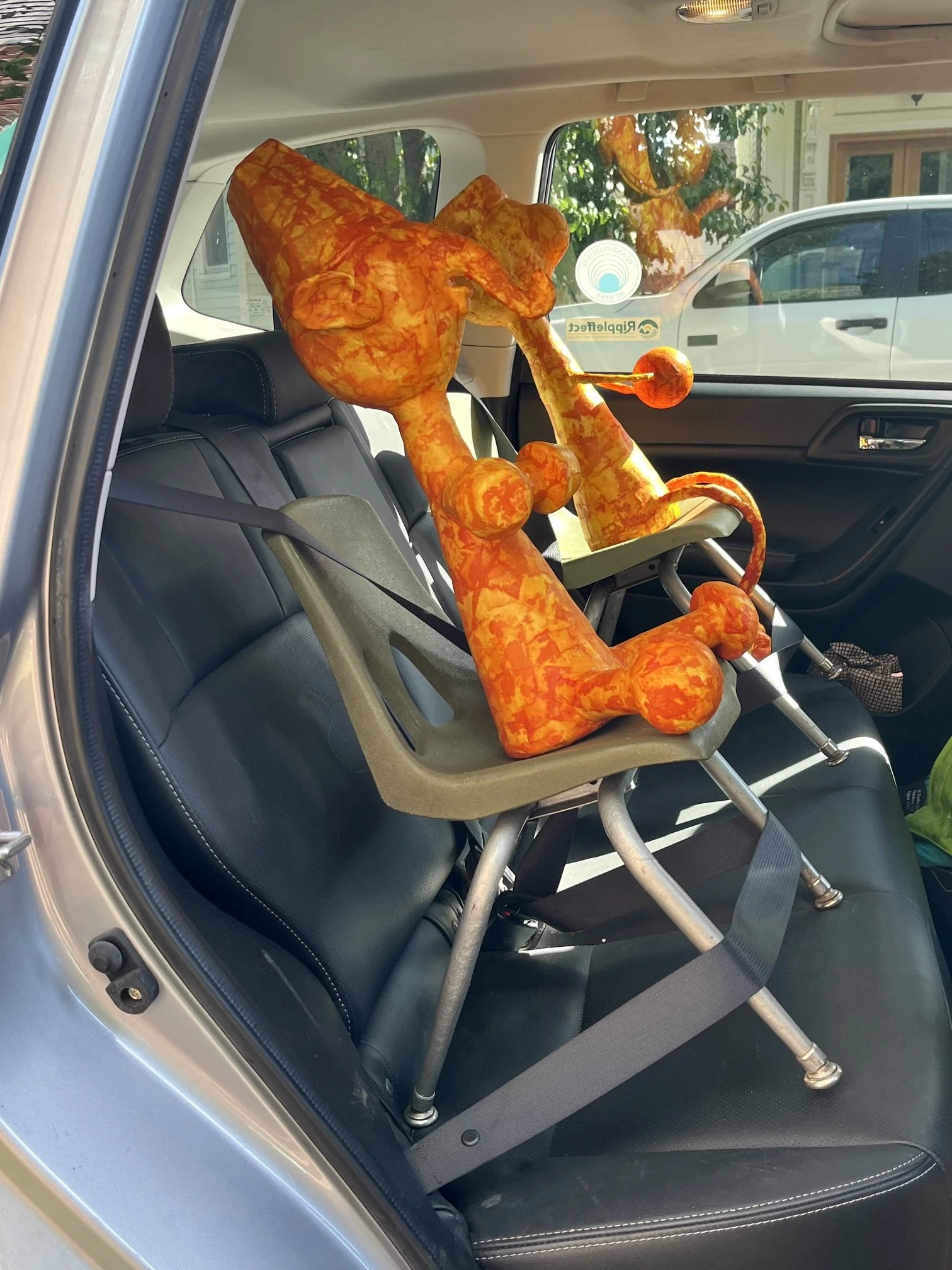
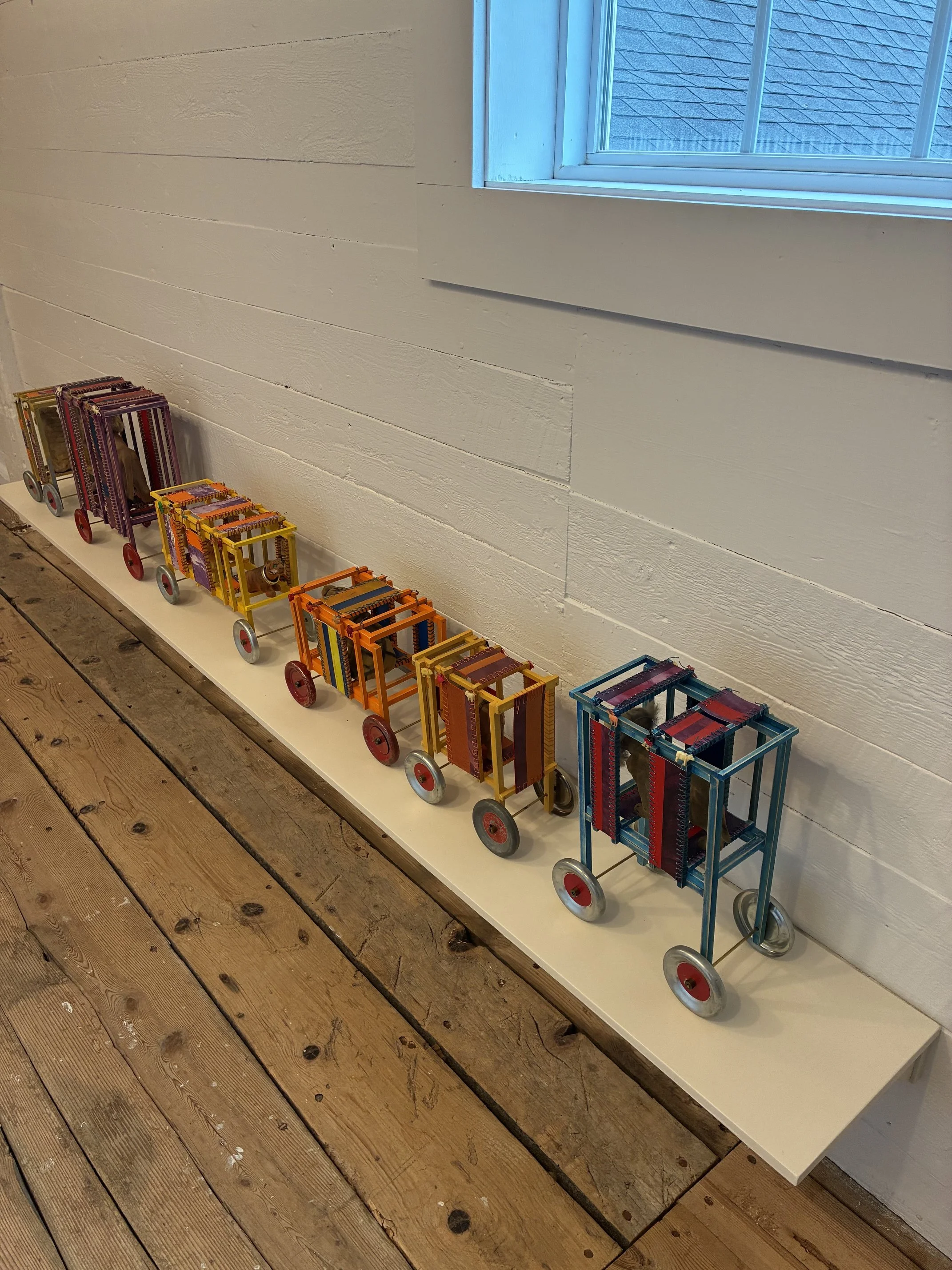
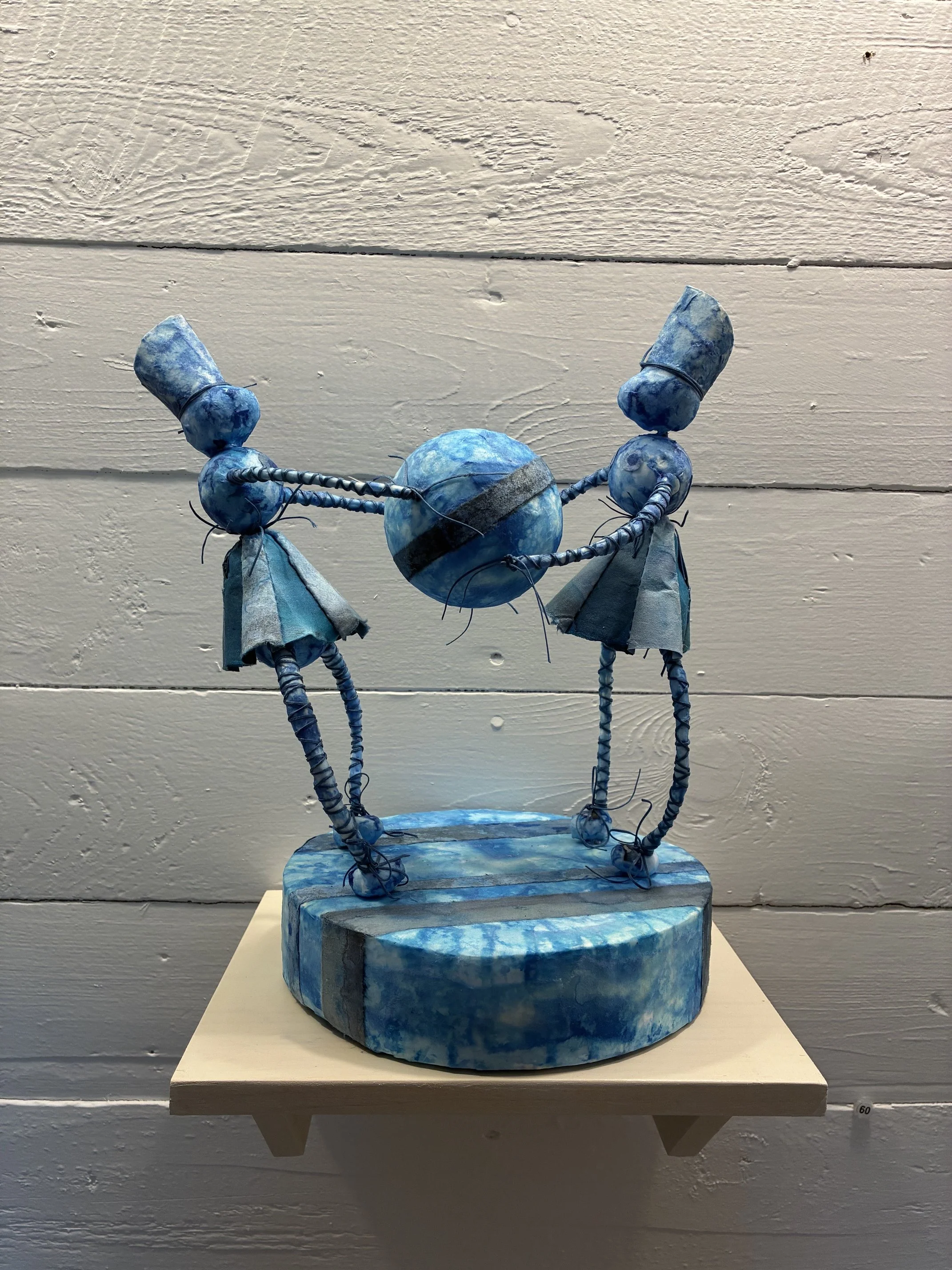
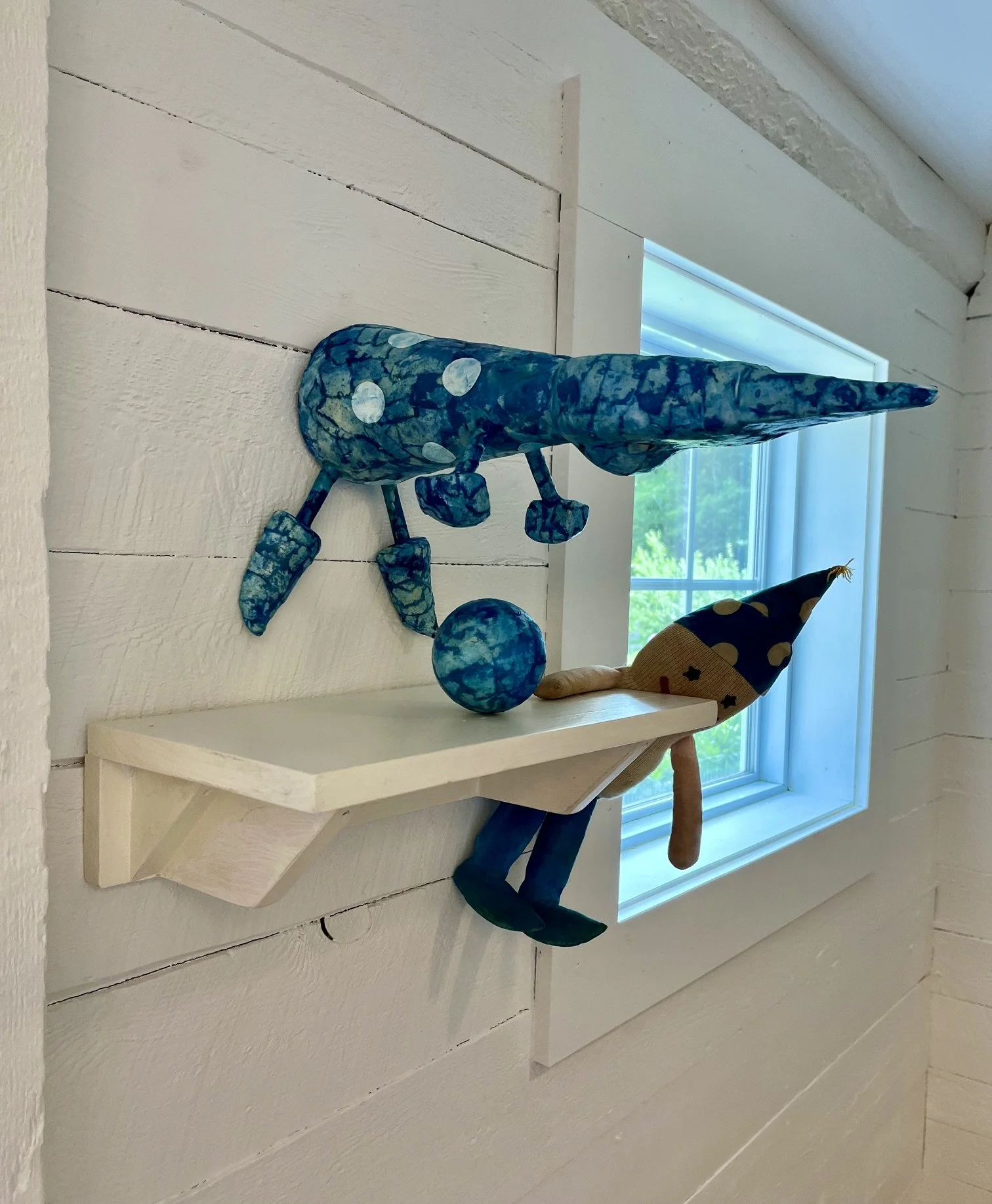
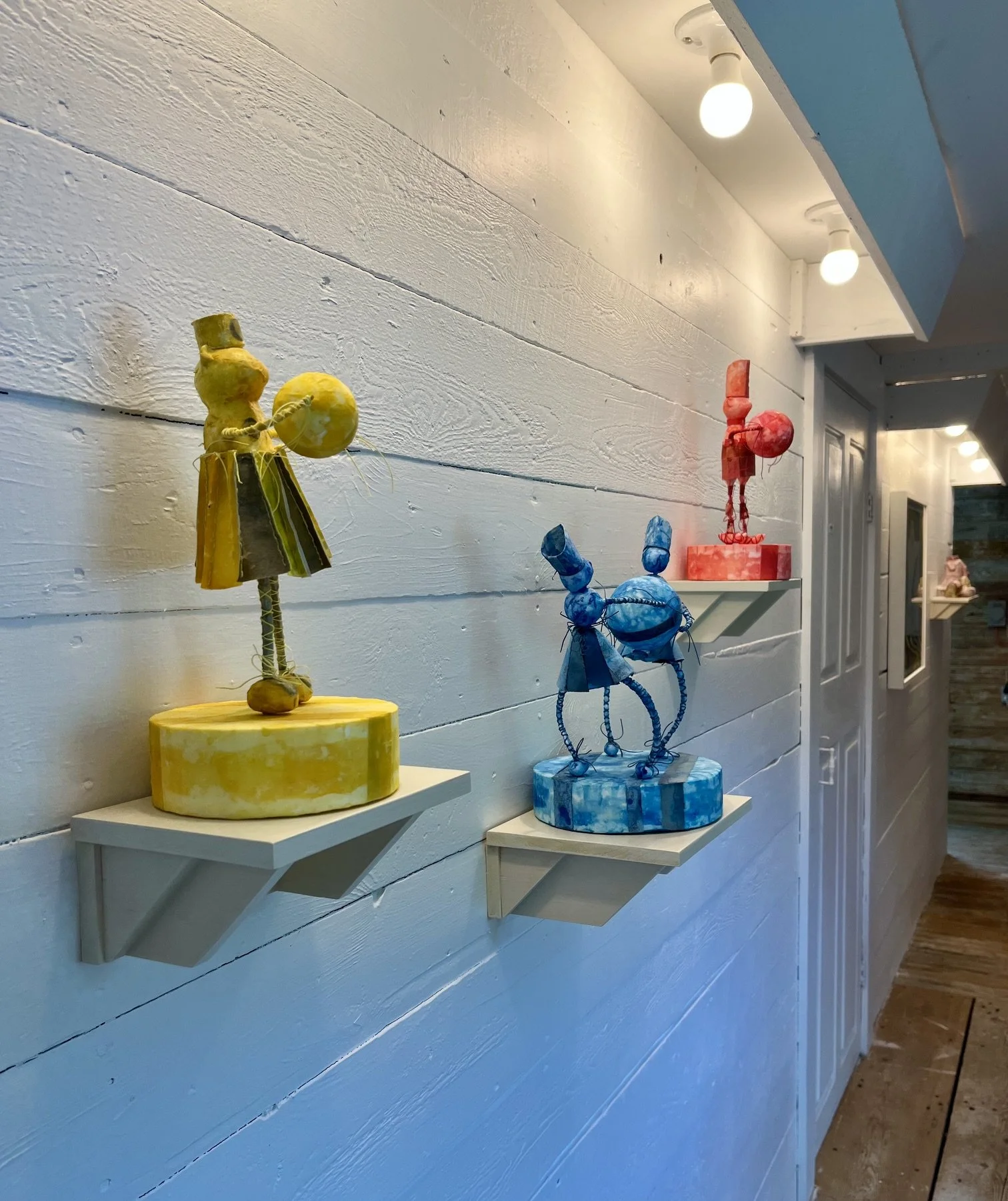
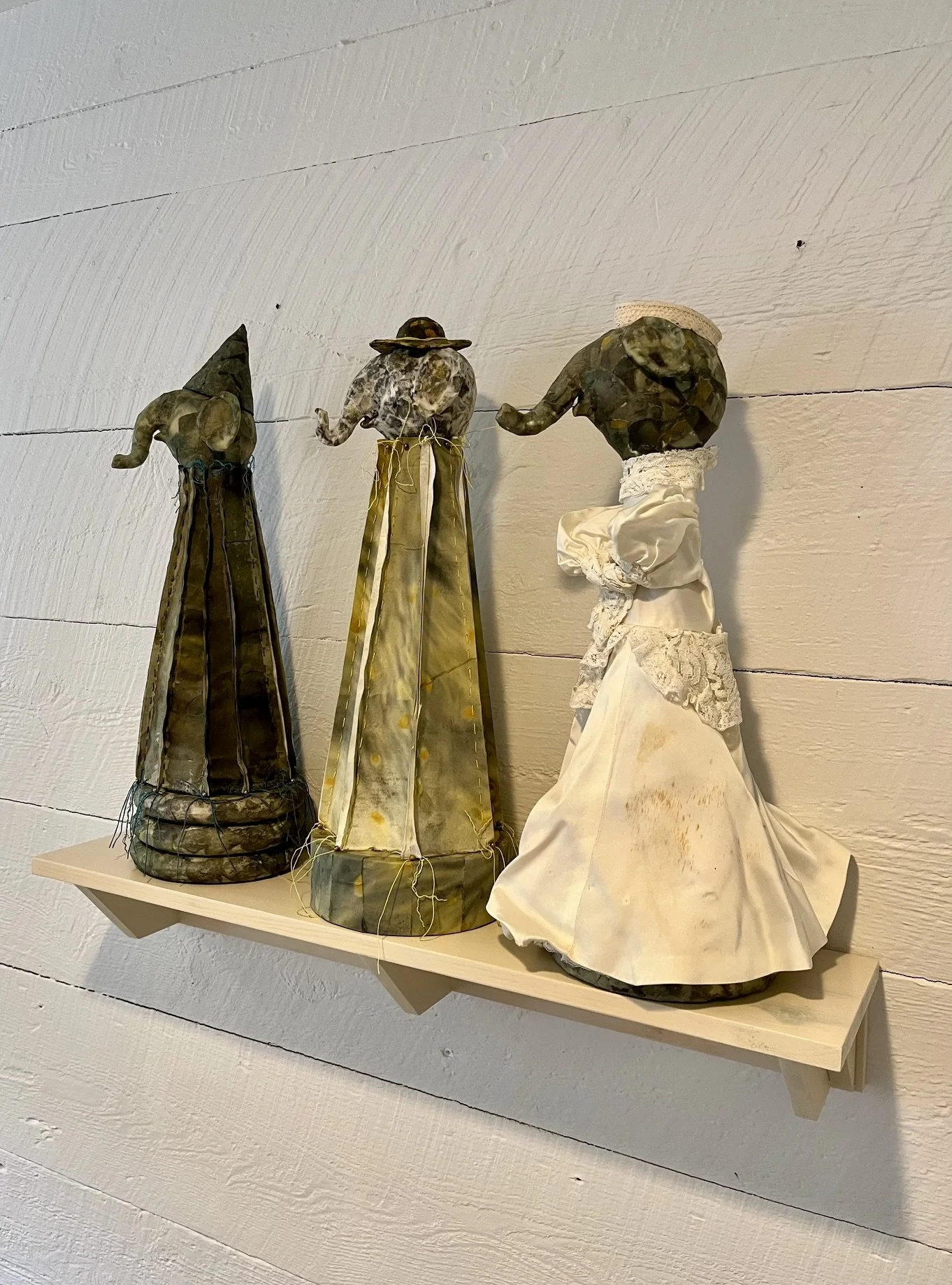
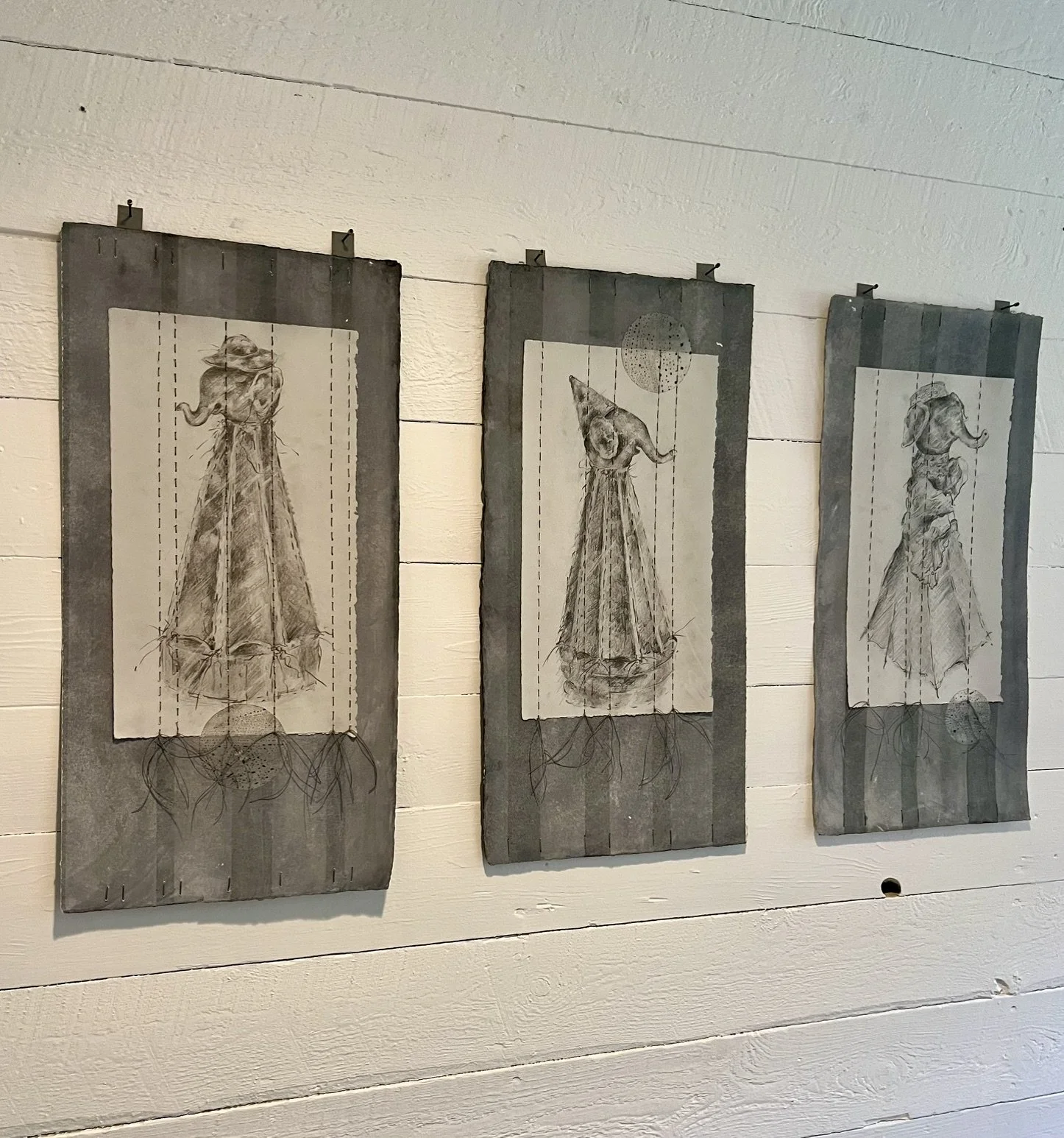
The exhibit included multimedia work; a film project recently edited from 1992, Animal Affairs, and a recent body of work based on Saalfield Publishing painting and drawing books produced in the early part of the 20th century. These books were collected in the 1980’s and were discovered while reorganizing my studio in 2024. I knew there was material in these books worth exploring and when closely examined I found they had been published in Akron, Ohio –my childhood home–and the work began to move forward. The works on paper involve pages from the painting and drawing books used as collage, painted over and embellished. The work on paper evolved into sculptural objects of circus performers and players, the film editing about the Fryeburg Fair continued to inspire me and the result…a project that both reflects past work and the present.
The subject of circus, carnival, and the evolving human animal relationships found at the spectacle of such events is a subject I have been drawn to time and time again.
Animal Affairs’ original edited film.
-
Animal Affairs, a video piece shot in 1992 at the Fryeburg Fair in Fryeburg, Maine, was edited thirty years later and is now part of Marjorie Moore’s 2026 show, The Show Must Go On.
In her artist statements, Moore writes, “That’s always been a motivation for me—to try and somehow meld loss and beauty and mystery and irony and memory and nostalgia.” This process of layering is fully present in Animal Affairs, inviting viewers to identify and experience those layers for themselves.
The improvised video documentary follows Moore, dressed like a Charlie Chaplinesque Yeshiva student, as she leads three actors/dancers dressed as a chicken, cow, and pig. Their masks are built on squares resembling a chain-link fence. They watch us watching them through this fence-like divider, creating distance and another layer between the viewer and the animals.
The irony becomes apparent as we enter the fair and realize that, although the footage is thirty years old, little has changed. The clothing and hairstyles are different, the vehicles are smaller, but the events—and the human relationship to animals—remain remarkably familiar.
Moore’s decision to leave the original timecode on the footage is another layer. It reminds us that we are watching an artifact: two and a half hours condensed into fifteen minutes, shaped by the director’s aesthetic choices and point of view.
Questions about animal exploitation are never preached or spoon-fed. Instead, they are woven together with irony, humor, and nostalgia. We smile when the “cow” looks at a sausage machine beneath the sign, “All sausage made here is served here,” or when the “chicken” stands beside a barbecue beneath the words, “Chicken like your mom’s.” We smile rather than judge because Moore trusts us to recognize the irony—and because we sense that she is smiling with us.
When the young farmer who won the “pig competition” is asked about the future of his prize pig, he simply responds, “My pig had a nice life. He lived to the fullest, and I have meat in my freezer.”
Moore’s layers transform a familiar documentary subject into art, wrapping it in irony, humor, memory, and observation and inviting us to peel those layers back. In doing so, she opens a “closed text” and reintroduces it as something fresh.
Review by Eran Preis
A playwright, scriptwriter, and Associate Professor of Film and Media Arts, Temple University, PA, USA; native Israeli from Moshav Beit Herut, now a naturalized American citizen; currently (8/98) working on a 90-minute "narrative-documentary" on the Jonathan Pollard spy case seeking to explore the themes of betrayal, Jewish identity, and dual loyalties as a way of understanding the American psyche.